Musée des Beaux-Arts
Le musée des Beaux-Arts est un établissement muséal labellisé, installé à Lille (Nord). L'histoire du musée se résume ainsi : C’est Bonaparte, Premier Consul, qui signe, le 1er septembre 1801, l’acte de naissance du musée de Lille. L’Etat attribue 46 œuvres à la ville.
En 1803, tout est prêt pour installer la collection dans la chapelle de l’ancien couvent des Récollets, rue des Arts.
L’idée de créer un musée départemental avait déjà germé dans la tête des élus lillois lors de l’ouverture, en 1775, d’une académie des Beaux-Arts (une école de dessin a vu le jour vingt ans plus tôt et, à partir de 1773, des Salons d’artistes ont eu lieu jusqu’en 1788, et à nouveau de 1799 à 1808, pour montrer que « les Lillois sont restés fidèles au culte du beau »).
Professeur à l’école et à l’académie, le peintre Louis Watteau – neveu du célèbre Antoine Watteau de Valenciennes – est désigné, en 1795, par la Commission centrale des arts, pour assurer l’inventaire des centaines de tableaux saisis aux émigrés lillois, aux églises, aux couvents, aux hospices, entreposés dans l’ancien couvent de Récollets.
Le musée ouvre enfin ses portes en 1809, proposant un catalogue de 109 œuvres. C’est en 1834 que la ville hérite d’un trésor, l’exceptionnel legs Wicar.
En 1850, le musée présente plus de 250 œuvres, prêtes à rejoindre les salles plus spacieuses et plus lumineuses du tout nouvel Hôtel de ville, place Rihour. L’ouverture du musée, en 1850, est un événement.
Le vaste quadrilatère de l’Hôtel de Ville, avec ses pavillons d’angles, est bâti d’après les plans de l’architecte Charles César Benvignat (1805-1877) dans le style Renaissance, sur l’emplacement du Palais Rihour, ancienne résidence des ducs de Bourgogne.
Le deuxième étage est entièrement consacré au musée. On compte au moins 11 salles : Pas un jour sans que les collections ne s’enrichissent. On est frappé, en cette seconde moitié du XIXe siècle, par l’exceptionnel dynamisme des conservateurs et des commissions artistiques.
Les années 1848 à 1862 sont particulièrement fastes. 122 nouveaux tableaux rejoignent les collections. Alexandre Leleux lègue au musée, en 1873, sa collection de maîtres flamands et hollandais. Cinq ans plus tard, et jusqu’à sa mort en 1866, Brasseur enrichit la collection de 140 œuvres.
Chose admirable, Reynart, avec l’aide de deux amis, acquiert sur ses propres deniers une œuvre de Goya, « Les Vieilles », dont il fait don au musée qui acquiert au même moment « Les Jeunes ».
L’incontournable vedette en ces temps-là est la « Tête de cire », magnifique buste d’une jeune fille, attribué alors à Raphaël. Après plusieurs décennies, le musée se trouve de nouveau à l’étroit. On se met à rêver d’un nouveau bâtiment exclusivement réservé aux arts, qui ouvre en 1892.
Lille est occupée par l’armée allemande dès le 12 octobre 1914. Deux jours plus tard, le musée est réquisitionné, mais reste ouvert jusqu’en 1918. En 1977, la donation Masson fait entrer au musée un ensemble important d’œuvres impressionnistes.
Spécialiste de l'Islam, Denise Masson, à qui l'on doit une traduction du Coran, complète "ainsi ses actes de générosité antérieurs qui s'inscrivaient dans la droite ligne de l'intention exprimée dès 1921 par son père [l'avocat Maurice Masson (Hazebrouck, 1873 - Marrakech, 1947)], que sa remarquable collection revienne au musée de Lille après sa mort.
Le musée rénové a ouvert ses portes en 1997. Rubens, Goya, Delacroix, Courbet, Monet, Rodin, van Dyck, Brueghel, Bosch, Donatello, Greco, Raphaël, Michel-Ange est la personnalité emblématique de ce musée.
Son intérêt réside dans : L’idée d'un bâtiment exclusivement dédié au musée est encouragée par Gery Legrand, poète et journaliste, élu maire en 1881. L’emplacement est vite trouvé, face à la préfecture, place de la République. Le projet doit être financé par une loterie.
En 1883, la ville encaisse 2.800.000 francs au lieu des 5 millions escomptés. Un concours, à destination des architectes français, pour la construction d’un Palais des Beaux-Arts est aussitôt lancé. Le jury choisit le projet présenté par deux architectes parisiens : Edouard Bérard et Fernand Delmas.
A la mi-août 1885, le chantier démarre. Finalement ne sera réalisé que la moitié du projet initial.
Sur la place de la République, créée lors de l’agrandissement de Lille en 1858, sont ainsi mis en scène, face à face, deux bâtiments de prestige : la préfecture (1865) et le Palais des Beaux-Arts (1892). Le Palais des Beaux-Arts est inauguré (en présence de 600 invités) le dimanche 6 mars 1892.
En 1939, le « Guide bleu » signale que « d’importants travaux récemment terminés ont transformé la cour intérieure en un hall monumental de 1.600 m2. Le temps et les deux guerres ont conduit à la dégradation du musée. L’arrivée des plans-reliefs accélère la décision de rénovation.
L’appel à candidature pour un concours d’architecture est lancé en octobre 1989. Lille va fermer les portes de son Palais des Beaux-Arts de 1991 à 1997.
Rendre le musée plus transparent, l’ouvrir sur la ville, mieux accueillir et informer les visiteurs, telles sont les idées qui sous-tendent le projet de Marc Ibos et Myrto Vitart retenu, en mai 1991, lors du concours d’architecture. Un défi de taille les attend : trouver 5.000 m2 supplémentaires.
La réouverture le 7 juin 1997 permet de découvrir deux immenses lustres, exubérants et multicolores et les nouvelles salles, la galerie des sculptures du XIXe siècle, le sous-sol qui révèle les fastueux ensembles du moyen âge et de la Renaissance.
L’espace d’exposition des plans-reliefs et la salle dédiée aux expositions temporaires, éclairée par une grande dalle de verre.
Ses points forts : L'un des premiers musées français, abrite : - des collections de peinture européenne ; - un cabinet des dessins ; - un département des Antiquités, du moyen âge et de la Renaissance ; - des céramiques des XVIIe et XVIIIe siècles ; - des sculptures françaises du XIXe siècle ; - des Plans-Reliefs du XVIIIe siècle.
Les collections de l'établissement portent sur : Archéologie, Arts décoratifs, Art moderne et contemporain, Beaux-arts. Pour s'y rendre : place de la République, Lille. Le site du musée est consultable à l'adresse : pba.lille.fr/. Téléphone : 03 20 06 78 00.
History
It was Bonaparte, First Consul, who signed, on September 1, 1801, the act of birth of the Lille Museum. The State allocated 46 works to the city. In 1803, everything was ready to install the collection in the chapel of the former Recollet monastery, on Rue des Arts.
The idea of creating a departmental museum had already germinated in the minds of Lille elected officials during the opening of an Academy of Fine Arts in 1775 (a drawing school was established twenty years earlier and, from 1773, Artists' Salons took place until 1788, and again from 1799 to 1808, to show that "the people of Lille remained faithful to the cult of beauty").
Professor at the school and academy, the painter Louis Watteau – nephew of the famous Antoine Watteau of Valenciennes – was designated in 1795 by the Central Arts Commission to inventory the hundreds of paintings seized from Lille émigrés, churches, convents, and hospices, stored in the former Recollet convent.
The museum finally opened its doors in 1809, offering a catalog of 109 works. It was in 1834 that the city inherited a treasure, the exceptional Wicar legate. By 1850, the museum displayed over 250 works, ready to move into the larger, brighter rooms of the brand new Hôtel de Ville on Place Rihour.
The opening of the museum in 1850 was an event.
The vast quadrilateral of the Hôtel de Ville, with its corner pavilions, was built according to the plans of architect Charles César Benvignat (1805-1877) in Renaissance style, on the site of the Palais Rihour, the former residence of the Dukes of Burgundy.
The second floor was entirely dedicated to the museum. There are at least 11 rooms: Not a day went by without the collections being enriched. In the second half of the 19th century, one is struck by the exceptional dynamism of the curators and artistic commissions.
The years 1848 to 1862 are particularly prosperous. 122 new paintings joined the collections. Alexandre Leleux bequeathed his collection of Flemish and Dutch masters to the museum in 1873. Five years later, and until his death in 1866, Brasseur enriched the collection with 140 works.
Remarkably, Reynart, with the help of two friends, acquired a work by Goya, "The Old Women," with his own money, which he donated to the museum, which at the same time acquired "The Young Women." The incontournable star at that time was the "Wax Head," a magnificent bust of a young girl, then attributed to Raphael.
After several decades, the museum was once again cramped. A new building exclusively for the arts was dreamed of, opening in 1892. Lille was occupied by the German army starting October 12, 1914. Two days later, the museum was requisitioned but remained open until 1918.
In 1977, the Masson donation brought a significant collection of Impressionist works into the museum.
Specialist in Islam, Denise Masson, who translated the Quran, thus completed her previous acts of generosity, which aligned with her father's expressed intention in 1921 that her remarkable collection should return to the Lille Museum after her death.
The renovated museum opened its doors in 1997.
Collection highlights
One of the first French museums, houses: - collections of European paintings; - a drawing cabinet; - a department of Antiquities, the Middle Ages, and the Renaissance; - ceramics from the 17th and 18th centuries; - French sculptures from the 19th century; - 18th-century Plans-Reliefs.
The building
The idea of a building exclusively dedicated to the museum is encouraged by Gery Legrand, poet and journalist, who was elected mayor in 1881. The location is quickly found, opposite the prefecture, Place de la République. The project should be funded by a lottery.
In 1883, the city receives 2,800,000 francs instead of the 5 million expected. A competition, open to French architects, for the construction of a Palais des Beaux-Arts is immediately launched. The jury chooses the project submitted by two Parisian architects: Edouard Bérard and Fernand Delmas.
In mid-August 1885, construction begins. Ultimately, only half of the original project will be realized. On Place de la République, created during Lille's expansion in 1858, two prestigious buildings are thus showcased face to face: the prefecture (1865) and the Palais des Beaux-Arts (1892).
The Palais des Beaux-Arts was inaugurated (in the presence of 600 guests) on Sunday, March 6, 1892. In 1939, the "Guide Bleu" reports that "recently completed major works have transformed the inner courtyard into a monumental hall of 1,600 m2.
Time and the two wars have led to the degradation of the museum. The arrival of relief maps accelerates the decision for renovation. A call for applications for an architecture competition was launched in October 1989. Lille closed the doors of its Palais des Beaux-Arts from 1991 to 1997.
To make the museum more transparent, open it to the city, better accommodate and inform visitors—these are the ideas underlying the project by Marc Ibos and Myrto Vitart, selected in May 1991 during the architecture competition. A major challenge awaited them: finding an additional 5,000 m2.
The reopening on June 7, 1997, allows visitors to discover two enormous chandeliers, exuberant and multicolored, and the new rooms, the 19th-century sculpture gallery, the basement revealing the lavish ensembles of the Middle Ages and the Renaissance.
The relief map exhibition space and the room dedicated to temporary exhibitions are illuminated by a large glass slab.
Notable figures associated with the museum
Rubens, Goya, Delacroix, Courbet, Monet, Rodin, van Dyck, Brueghel, Bosch, Donatello, Greco, Raphael, Michelangelo
Domains and collections
Collection themes
Antiquités étrangères : Grecques et romaines, Egyptiennes;Archéologie nationale : Médiéval;Architecture et urbanisme;Art moderne et contemporain;Arts décoratifs : Céramique, Orfèvrerie;Beaux-Arts : Dessin, Peinture, Sculpture;Collections militaires : Armes;Photographie, Manuscrits, incunables, Moulages, Numismatique, Sigillographie;Ethnologie : Pratiques religieuses et collectives
Collection works
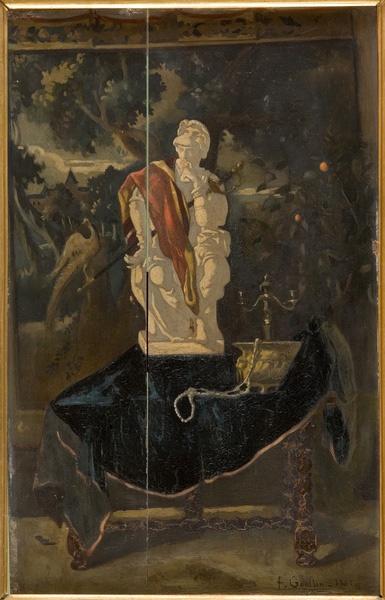
The Thinker
peinture, beaux-arts'Sine Cerere et Baccho Venus friget' (Venus shivers without…
peinture, beaux-arts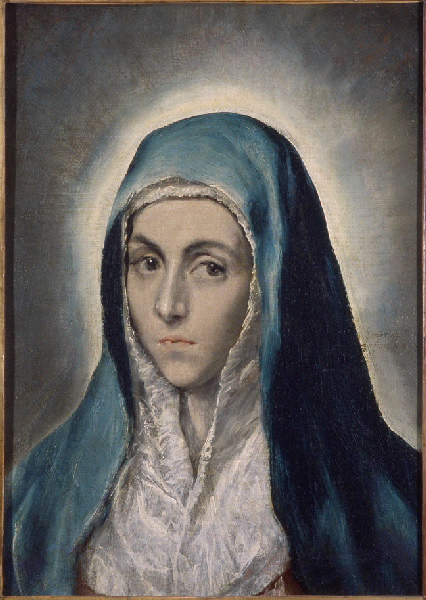
(Homage to the Tempest by Giorgione); 42 Hours of the Wolf…
peinture, beaux-arts, art contemporain(Untitled)
drawing(Untitled)
printMuseums nearby
Museum presentation
Situated in Lille, in the heart of the Nord department, musée des Beaux-Arts holds the « Musée de France » label granted by the Ministry of Culture.
This institution fulfills a public service mission by making its collections accessible to the widest possible audience and contributing to the artistic and cultural education of the territory.
Collections and fields
The collections of musée des Beaux-Arts cover the following fields: Archéologie, Arts décoratifs, Art moderne et contemporain, Beaux-arts. These holdings, built up over decades, reflect the richness of the local heritage and offer a varied overview of artistic and scientific expressions.
The museum pursues a policy of enriching its collections through acquisitions, donations, and deposits.
Practical information
musée des Beaux-Arts is located at place de la République, 59000 Lille. Opening hours and admission fees may vary depending on the season. It is recommended to contact the museum directly or check its official website before your visit.
The institution may offer guided tours, educational workshops, and events for all audiences.
The museum and its territory
musée des Beaux-Arts is part of the cultural landscape of Lille and, more broadly, of the Nord department. The city is home to other cultural and heritage institutions that complement the museum's offerings.
A visit to Lille allows you to combine discovering the museum with exploring the architectural and natural heritage of the area.
The 'Museum of France' label
The « Musée de France » label is governed by the law of January 4, 2002, on museums in France.
It is awarded to museums whose collections are of public interest and that commit to meeting obligations regarding conservation, restoration, inventory, and accessibility. musée des Beaux-Arts meets these requirements and thus ensures the preservation of its collections for future generations.
Data sources
The information presented on this page comes from the Muséofile database of the Ministry of Culture, published on data.culture.gouv.fr under the Open License v2.0 (Etalab). The artworks associated with this museum come from the Joconde database. This data is updated regularly.
See also
tpl.voir_aussi_artists_exposed
tpl.voir_aussi_movements
tpl.voir_aussi_techniques
tpl.voir_aussi_related
Frequently Asked Questions
Everything you need to know
musée des Beaux-Arts is located in Lille, in the Nord department. Check the museum's record for the full address and contact details.
musée des Beaux-Arts's collections are listed in the Culture Ministry's Museofile database. Visit the museum's page to see the themed areas covered by its collections.
Yes, musée des Beaux-Arts bears the « Musée de France » label awarded by the Culture Ministry, which guarantees the quality and accessibility of its collections.
Part of musée des Beaux-Arts's works have been digitized and are accessible on our website via the Joconde database. The number of works available online may vary.
Opening hours vary according to the season and the day of the week. Contact the museum directly or visit its official website for current hours.
Prices depend on the institution. Many museums offer discounted rates and free admission for certain visitor categories.
Accessibility varies depending on the institution and the layout of the premises. Check with the museum before your visit to know about available accommodations.
Other labelled museums are located in Lille or neighboring municipalities. Check the city or department page for the full museum offerings.
Many labelled museums offer guided tours, workshops, and activities. Contact the institution directly to find out about current programs.
The data comes from the Culture Ministry's Museofile database (data.culture.gouv.fr), distributed under the Open License v2.0.